
Distributed Call Center Software for India: Why Language Changes Every 20 km Changes Everything
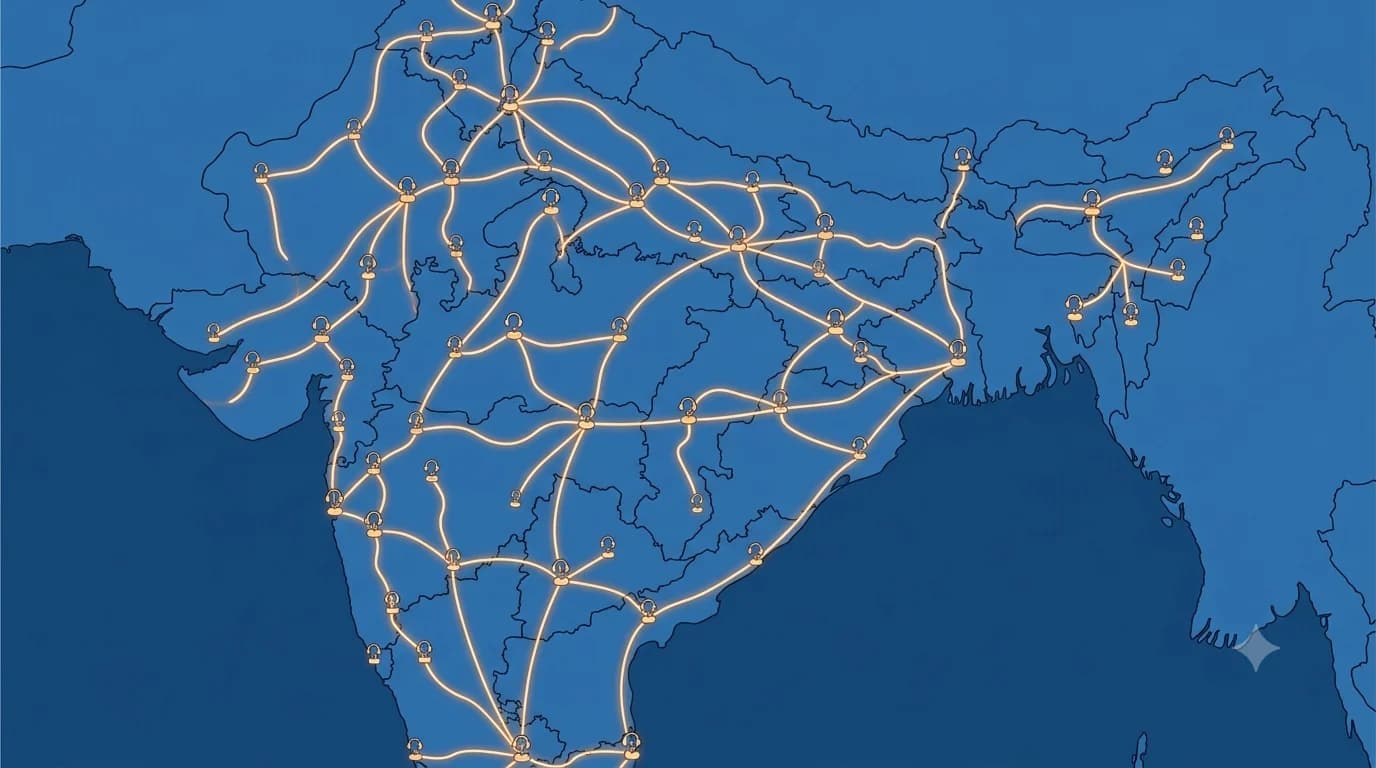
You have a sales team in one city trying to close customers in fifteen others. The script is in standard Hindi. The agent speaks with a Pune accent. The customer in Bhagalpur grew up speaking Maithili and negotiates in Bhojpuri-flavoured Hindi. The call technically connects. The deal does not.
This is not a training problem. It is a geography problem. And the only tool that solves a geography problem is software that understands geography.
What is a distributed call center?
A distributed call center is a sales or support operation where agents work across multiple locations instead of a single office floor. The software connects them, routes calls intelligently, and gives managers the same visibility they would have if everyone sat in the same room.
It is different from remote work in one important way: distributed call centers are deliberately structured around geography. You are not just giving people laptops and hoping for the best. You are putting agents in the markets they serve, routing leads to agents who speak the right language, and using software to coordinate the whole operation as if it were one team.
The alternative, a centralised call center staffed by agents fluent in one language variant trying to sell across India, works well in theory and poorly in practice.
India's language problem is a sales problem in disguise
India has 22 officially recognised languages. Linguists count over 780 living languages and roughly 19,500 dialects. The shorthand people use is that the language changes every 20 kilometres. That is close enough to true to treat as a design constraint.
Cross from western Uttar Pradesh into eastern UP and the Hindi shifts in rhythm, vocabulary, and register. Cross from Coastal Karnataka into Kodagu and you are in a different linguistic world. Tamil Nadu alone has enough internal dialect variation that an agent from Chennai can sound foreign to a customer in Madurai.
For a call center, this matters in three direct ways.
Trust builds faster in the right language. A customer who hears their own dialect does not just understand you better. They unconsciously assign you more credibility. The accent signals that you are from their world, not a call center in a distant city reading from a script.
Objections land differently by region. The stalling phrases, the negotiation rhythms, the cultural norms around saying no directly versus indirectly, these are all language and region-specific. An agent who grew up in the same cultural context reads these signals automatically. An agent from outside the region misses them, or misinterprets them as interest when they mean no, or as no when they mean maybe.
Call connect rates vary by geography. Beyond language, the time of day a customer picks up, how they prefer to be addressed, how much time they will give an unsolicited call before hanging up - all of this is shaped by local culture and livelihood patterns. A distributed team calibrated to each market outperforms a centralised team that applies one uniform approach to the whole country.
The cost case for going distributed
A call center seat in Mumbai or Bengaluru carries real overhead: commercial real estate in expensive markets, salary expectations driven by urban cost of living, and fierce competition for experienced agents. The same quality of agent in Nagpur, Lucknow, or Coimbatore costs materially less to hire and retain.
Distributed software means you do not sacrifice control to access that cost structure. Your Nagpur team is as visible to management as a team sitting downstairs. Supervisors monitor live calls, coach in real time, and pull performance reports across every location from a single dashboard. The savings from distributing into tier-2 and tier-3 markets regularly pay for the software investment within the first year.
There is also a resilience argument. One power outage, one local shutdown, one extreme weather event can take a centralised operation offline entirely. Distributed teams absorb local disruptions without going dark. When one cluster has a problem, the rest of the operation keeps running.
How to structure a distributed team around India's languages
The starting point is a region-language matrix. Do not think in terms of headcount. Think in terms of which languages you need covered, at what density, during which hours.
A workable structure for a pan-India operation:
| Region | Primary languages | Secondary coverage |
|---|---|---|
| North (UP, Bihar, MP) | Hindi, Bhojpuri, Awadhi | Urdu |
| West (Maharashtra, Gujarat) | Marathi, Gujarati | Hindi |
| South (TN, Karnataka, AP, Kerala) | Tamil, Kannada, Telugu, Malayalam | Each other minimally |
| East (West Bengal, Odisha) | Bengali, Odia | Hindi |
| Northeast | Assamese, English, local dialects | Hindi minimally |
| Delhi NCR | Mixed Hindi, Punjabi | English |
Each cluster needs its own agent pool and a supervisor who understands the regional context. The software handles the routing: a lead with a Maharashtra mobile number goes to a Marathi-speaking agent automatically, without a supervisor making that call manually.
Build language tags into your CRM from the start. If you are importing leads and the language field is missing, the phone number's registered state gives you a strong signal. Tag every lead record with a preferred language and configure your routing rules to match. Once this is set up, language-appropriate routing happens without human intervention on every single call.
What distributed call center software must actually do
Not every call center platform was built for distributed operations. These are the features that matter when your team spans multiple cities and languages.
Routing on agent attributes, not just availability. Basic routing sends calls to whoever is free. Distributed routing sends calls to whoever is free AND speaks the right language AND works the right region AND handles the right product line. The routing engine needs to support all of these as variables, not just one.
Real-time supervisor visibility across all locations. A dashboard that refreshes every five minutes is not real-time. You need live call status, queue depth, agent availability, and call outcomes across every cluster simultaneously. Supervisors cannot walk the floor; the dashboard is the floor.
Workflow automation between handoffs. Distributed teams create gaps between agents and supervisors. Automation fills those gaps: follow-up SMS goes out when a call ends without a conversion, lead status updates in the CRM without manual entry, a reminder schedules when a callback is promised. The calls happen on the agent's phone; the workflow machinery runs in the cloud.
Mobile-first agent interface. Many distributed agents in tier-2 and tier-3 India operate primarily from Android handsets, not desktops. The agent experience cannot be a stripped-down mobile version of a desktop app. It needs to be designed for mobile as the default.
Offline resilience. Connectivity in tier-2 and tier-3 cities is improving but not guaranteed. Call records, disposition updates, and follow-up notes should queue locally when the agent is offline and sync when connectivity returns, not disappear.
SIM-based calling. VoIP works well in metro offices on stable broadband. Outside metros, it drops calls and produces audio quality problems that kill trust in the first ten seconds. SIM-based calling uses the carrier's voice network directly, the same network the customer's phone is on, and connect rates in tier-2 and tier-3 India run 15 to 25 percentage points higher as a result. A distributed team serving customers across India needs SIM-based, not VoIP.
The five mistakes that break distributed call centers
Treating it as a technology problem only. Software is an enabler, not a solution. If your agents in Patna do not have stable 4G, or your supervisor in Lucknow cannot coach agents in real time, the software cannot compensate. Infrastructure at the agent level is a prerequisite.
One script for the whole country. A script written for formal Hindi does not land in Bhojpuri-speaking Bihar. A conversion pitch built for an urban Bangalorean does not resonate in semi-urban Coimbatore. Distributed teams need regionalised scripts, and the CRM should serve the right version based on the agent's cluster.
Centralised reporting with a distributed team. If all reporting flows to one central manager who does not know the regional context, insights get lost. Build regional team leads into the structure who report upward, with the software aggregating their data centrally. The judgment layer stays local; the visibility layer goes global.
Ignoring actual working hours by region. India has one official time zone but materially different rhythms by region and livelihood. Agricultural markets in tier-3 cities are often most reachable at midday. Northern urban markets go quiet after 9 p.m. Distribute your coverage schedules to match customer availability, not just what is convenient for agents.
Manual data sync. In a distributed setup, the CRM is the single source of truth. If agents update call outcomes in a personal spreadsheet and sync manually, you will have data conflicts, duplicate follow-ups, and customers who hear from two agents about the same deal. Real-time sync from the agent's phone to the CRM is not optional; it is the whole architecture.
What conversion actually looks like when you get this right
The outcomes from well-structured distributed operations in India are consistent enough that the pattern is predictable.
Connect rates go up when agents call from local SIMs and customers see a familiar area code. Conversations run longer when the agent speaks the customer's language variant and understands their cultural reference points. Objection handling improves when the agent can read regional signals correctly instead of applying a generic script. Follow-up compliance improves when the CRM automates reminders instead of depending on agents to remember across a distributed team.
None of this requires a big team. A 20-agent distributed operation with the right software structure routinely outperforms a 50-agent centralised team because the 20 agents are having better conversations with the right customers in the right language.
Calliyo is built for exactly this. SIM-based calling, region and language routing, workflow automation, real-time supervisor dashboards, and an Android agent app designed for the way Indian sales teams actually work. If your current setup has you routing a Gujarati-speaking customer to a Hindi-only agent and hoping for the best, start the trial and see what happens when the routing matches the market.
Frequently asked questions
What is the difference between a distributed call center and a remote call center?
Remote call centers let agents work from home instead of a central office. Distributed call centers are deliberately structured across multiple geographic clusters, with each cluster serving a defined region or language group. The software routes calls based on agent location, language skills, and regional expertise, not just who happens to be available.
How many languages does a pan-India call center actually need to cover?
For meaningful coverage across India's major markets, you need at least Hindi, Marathi, Gujarati, Tamil, Telugu, Kannada, Malayalam, and Bengali. That covers roughly 85% of the urban buying population. Bhojpuri and Punjabi add significant reach in UP/Bihar and Punjab/Delhi NCR respectively. The exact list depends on your customer geography.
Does SIM-based calling work for a distributed team?
Yes, and it is often the better choice for distributed operations in India. SIM-based calls route over the carrier's voice network directly, not over the public internet, so they are not affected by the connectivity variation that causes VoIP quality problems in tier-2 and tier-3 India. Each agent uses a SIM on their Android device; calls are tracked, recorded, and synced to the CRM automatically.
How do managers supervise a distributed team in real time?
Good distributed call center software gives supervisors a live dashboard that shows every agent's status, every active call, queue depth, and recent outcomes across all locations simultaneously. Supervisors can monitor calls, send whisper coaching through the app, and pull performance reports by cluster, language group, or individual agent without being in the same building.
What is the minimum team size for a distributed call center to make sense?
Even teams of 10 to 15 agents benefit from distributed structuring if they are calling across multiple language regions. The routing and language-matching value kicks in as soon as you have agents in more than one city. The CRM overhead is the same whether you have 15 agents or 150.
How does lead routing by language work in practice?
When a lead comes in, the CRM reads the language tag on that lead record (set manually, from a form field, or inferred from the lead's phone prefix and registered state) and routes the follow-up call to an agent in the matching language cluster. If no agent in that cluster is available, the system falls back to a defined secondary language or holds the lead in queue rather than routing it incorrectly.